

One of the First Things I Look At in a Puppy Evaluation
One of the first things I begin the evaluation process with is simple.
I look at how the puppy takes food from my hand.
It gets noted.
Every time.
Because that one small moment tells me more than most people realize.
Why It Matters
There’s no training yet.
No conditioning.
No expectations placed on the dog.
Just instinct.
Just nerve.
Just the dog showing up as he is.
That’s what I want to see.
Because before I build anything, I need to know what I’m working with.
What I’m Actually Reading
It’s not about whether the dog eats.
Most puppies will eat.
It’s about how they take it.
That tells me:
How clear the dog is in his mind
How he handles pressure, even at a low level
How he engages with a human
How much possession and intensity he carries
How much control he has… or doesn’t have yet
It’s all there if you slow down and watch.
The Clean Take
When a puppy comes in calm… deliberate… and takes the food clean with a full mouth…
That’s a dog that’s thinking.
That’s a dog with balance.
There’s clarity there.
That kind of dog is easier to shape, easier to guide, and more predictable under pressure.
That matters.
The Hard Snatch
Some puppies come in fast.
They grab.
They hit the hand with intensity.
There’s drive in that.
There’s possession.
But there’s also a lack of control.
That’s not a bad thing.
But it tells me early that this dog is going to need structure… and he’s going to need it sooner rather than later.
The Hesitation
Then you’ll see the puppy that slows down.
Lip licking.
Reaching, then pulling back.
There’s uncertainty there.
That dog isn’t fully settled in himself yet.
That doesn’t mean he won’t come forward.
But it means I’m not going to rush him or apply pressure too early.
That dog gets built carefully.
The Refusal
If a puppy won’t take food at all…
That gets my attention immediately.
Now we’re looking at:
Stress
Environmental conflict
Nerve
Or very low motivation
That’s not something you ignore.
You don’t panic either.
But you respect what you’re seeing.
What Matters Most
One rep doesn’t tell the story.
Patterns do. «« that is important
I’m watching:
Consistency
Recovery
Engagement with me vs the environment
Does the dog come back in?
Does he stay connected?
Does he clear himself after something changes?
That’s where the truth is.
This Is Early Information
I’m not labeling the dog.
I’m not locking anything in.
I’m gathering information.
And then I build from there.
My Final Thinking on it
That simple act… taking food from your hand…
That’s one of the first conversations you have with a puppy.
And if you’re paying attention, he’s already telling you everything you need to know to get started.
Most people just don’t listen.
Question: can you cap drive to teach behaviors on aggressive dogs
This article is an excerpt from a book I wrote last year on this topic.
You’re not “fixing aggression” by paying it with a bite.
You’re channeling energy and building control within drive, and that only works under the right conditions.
When it works
Using a bite, tug, or decoy as a reward can be effective if the dog has clear, structured drive, not chaotic or defensive aggression.
This applies best to:
Dogs with prey-driven aggression
Dogs that show clear engagement and recoverability
Dogs that can come in and out of drive cleanly
In those cases, yes:
Cue behavior (sit, down, out, heel)
Dog complies
Immediate reward with bite or tug
You’re building:
Obedience inside drive
Clarity under pressure
A reinforcement system the dog actually values
Where it goes wrong
A lot of “aggressive” dogs are not in prey, they are in:
Defense
Fear
Conflict
If you start rewarding that state with a bite:
You reinforce instability
You increase intensity without control
You create a dog that is more reactive, not more trained
That’s how people accidentally build dangerous, unpredictable dogs
You have to ask:
Is this dog thinking, or reacting?
Thinking dog in drive → can learn, can be shaped, can be capped
Reactive dog in defense → needs clarity, not more pressure or stimulation
Drive capping specifically
Yes, drive capping is powerful, but only if:
The dog understands how to turn off pressure
There is clear obedience foundation
You are not stacking frustration on top of instability
Done right:
Dog learns: control → access to reward
Calm behavior → activates drive
Done wrong:
Dog learns: frustration → explosion → reward
my Bottom line
Yes, you can reward obedience with a bite.
But you are not rewarding aggression, you are rewarding controlled engagement inside a structured system.
If the dog is unstable, unclear, or operating out of fear, you need to fix that first.
Otherwise, you’re not training, you’re just adding fuel.
If your dog is showing aggression, the most important step is getting clear, experienced eyes on the behavior. Every case is different, and real progress starts with understanding the root of what is driving it. At K9 Dragon Factory, we work directly with aggression cases and behaviorally complex dogs, using structured, hands-on methods that create stability and control. If you are ready to give your dog a clear path forward and a true reset, contact us at shreveportdogtrainer.com to schedule an evaluation. We will assess your dog, identify what is actually happening, and show you exactly how to move forward with confidence.
Aggression in Dogs, A Primer
It All Begins Here
Yes we work with aggression cases! We can reform your dog in most cases. Many years of working with aggressive dogs gives us insight into how to work with your dog to correct the behavior and bring control and confidence in to your relationship with your dog.
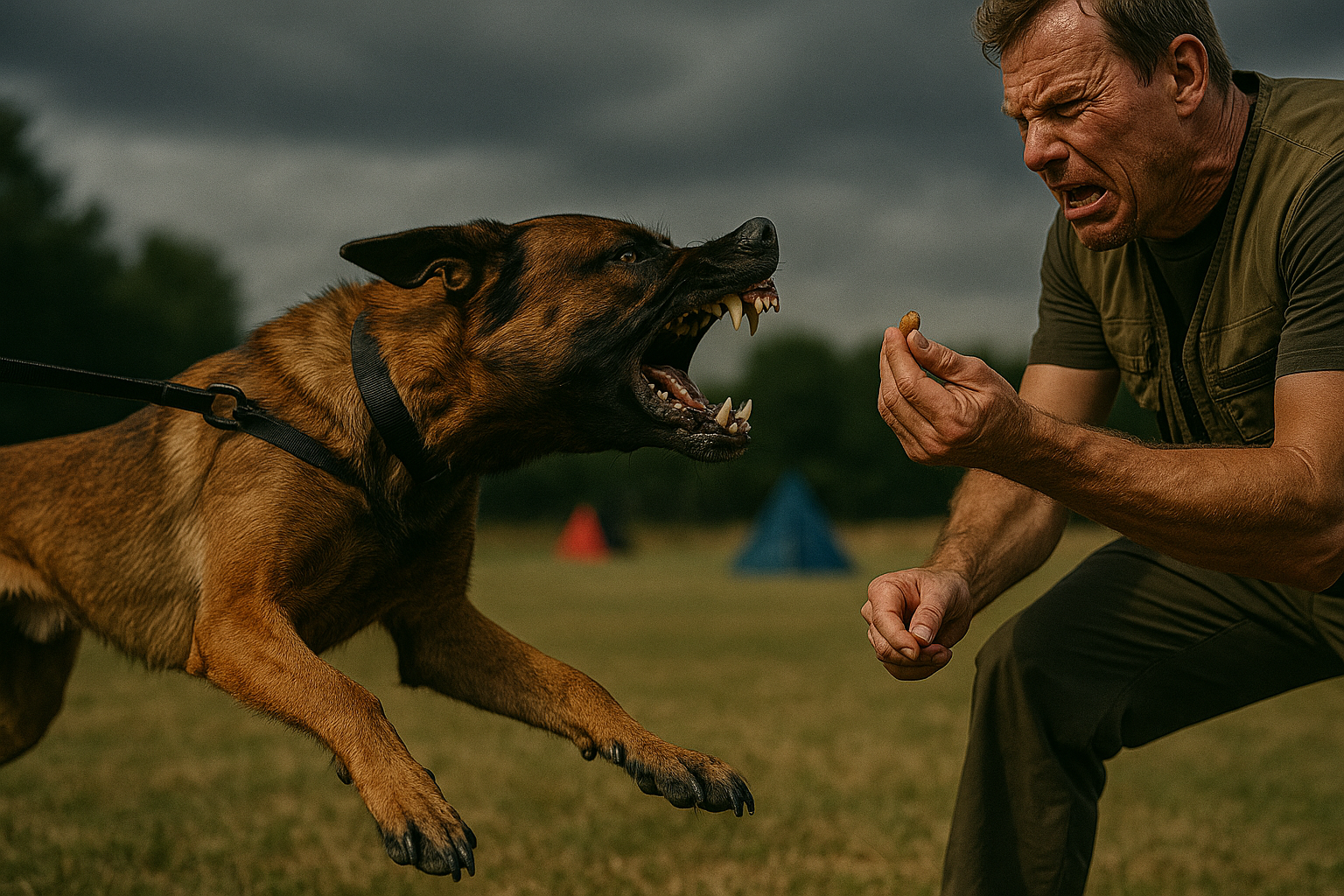
Aggression in dogs is not random, and it is not a personality flaw. It is a form of communication. When a dog displays aggression, it is expressing that something in its environment feels unsafe, overwhelming, or worth defending. This behavior is rooted in instinct and survival, not disobedience. Understanding this is the first step toward helping your dog improve.

Info Sheet On Dog Aggression
Aggression can take many forms, including growling, barking, lunging, snapping, and biting. These behaviors exist on a spectrum. Most dogs will give warning signs before escalating, but those signals are often subtle and easily missed. A stiff body, avoidance, hard staring, or tension in movement can all appear before more obvious reactions. When these early signs are ignored or misunderstood, the behavior can escalate.
There are several common reasons why dogs develop aggression. Fear is the most frequent cause. A fearful dog is not trying to control a situation, it is trying to create distance from something it does not trust. Resource guarding is another common factor, where a dog protects food, toys, space, or even people. Frustration can also lead to aggressive displays, especially when a dog is restrained on a leash and unable to reach something it wants. Pain or physical discomfort may lower a dog’s tolerance and cause defensive reactions. In some cases, aggression becomes a learned behavior if it has successfully worked in the past to make something go away.
Aggression typically develops in stages rather than appearing suddenly. A dog may first experience discomfort, then move into warning behaviors such as growling or barking, and finally escalate to snapping or biting if the situation continues. When early warnings are punished or suppressed, dogs may learn to skip those steps and react more quickly and more intensely. This is one of the most misunderstood aspects of aggressive behavior.
There are also several common misconceptions. Aggression is often labeled as dominance, but in most cases it is rooted in fear, stress, or confusion. Punishment alone does not resolve aggression and can increase the underlying tension driving the behavior. It is also important to understand that any dog, regardless of breed or temperament, can show aggression under the right conditions.
At its core, aggression is a message. The dog is communicating discomfort, uncertainty, or a need for space. It may be saying, “I am uncomfortable,” “I feel unsafe,” or “I do not know how to handle this situation.” When we begin to see aggression as communication rather than defiance, we can respond more effectively.
Improvement comes from understanding and structure. This includes identifying triggers, managing the dog’s environment, and creating clear and consistent expectations. Building trust through calm, structured interactions allows the dog to feel more secure. Teaching alternative behaviors gives the dog better options in situations where it would otherwise react. Over time, reducing stress and confusion leads to more stable and reliable behavior.
Aggression is not the end of the road. It is information. When you understand what your dog is trying to communicate, you can begin to guide them toward better choices and a more balanced state of mind.
Work With Us
If your dog is showing aggression, this is not something to wait on or hope resolves on its own. These behaviors escalate when misunderstood and avoided.
At K9 Dragon Factory, we specialize in aggression cases and behaviorally complex dogs. This is not basic obedience. This is structured, hands-on work designed to create real control, clarity, and stability.
If you are serious about fixing the problem, the next step is simple.
Contact us at shreveportdogtrainer.com and schedule an evaluation.
We will assess your dog, identify the root of the behavior, and lay out a clear path forward.